
The School of Materials Science and Engineering at Central South University traces its origins to 1952, when it was founded as the Department of Metal Technology. It was subsequently renamed the Department of Special Metallurgy in 1962 and the Department of Materials Science and Engineering in 1980, before being officially established as the School of Materials Science and Engineering in 2000.
Today, the School has 148 faculty and staff members, including 115 full-time academic staff: 65 professors, 39 associate professors, and 11 lecturers. Its academic community includes 1 Academician of the Chinese Academy of Engineering, 15 nationally recognized high-level talents, and 3 experts receiving special allowances from the State Council. The School has approximately 2,200 students, including more than 1,300 undergraduates and over 800 master's and doctoral students.

- Department of Metal Technology
- Department of Special Metallurgy
- Department of Materials Science and Engineering
- School of Materials Science and Engineering
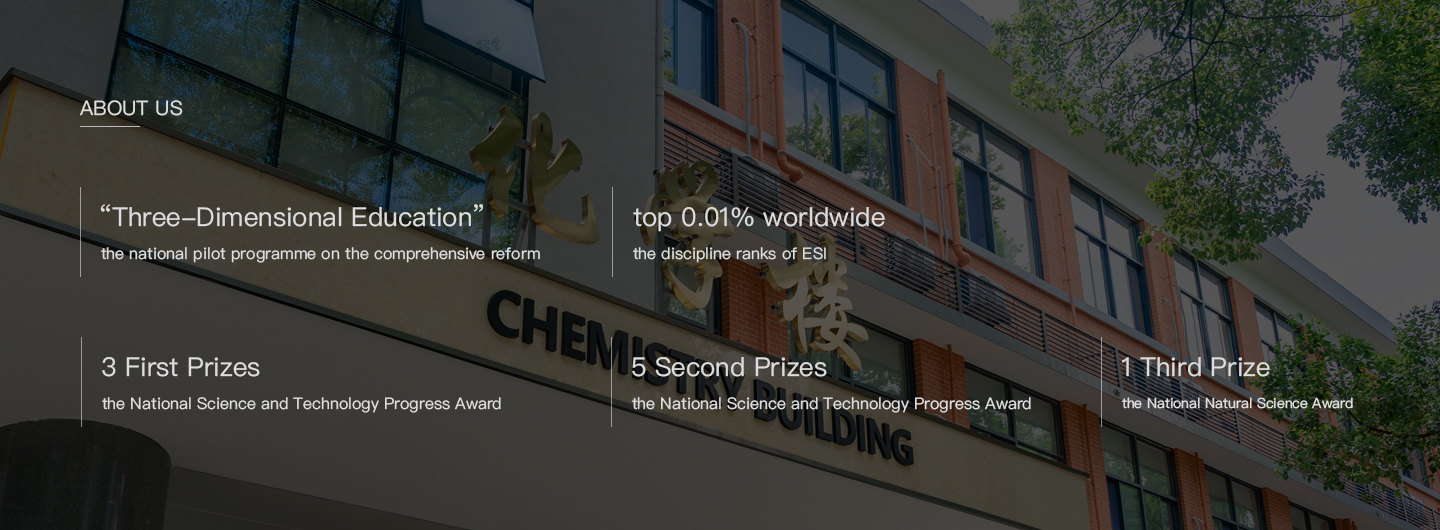
The School is among the first institutions in China selected for the national pilot programme on the comprehensive reform of “Three-Dimensional Education” and has been recognised as a National Advanced Collective in the Education System. It is also one of the country's earliest authorised institutions for master's and doctoral degree education, first-level doctoral programmes, professional doctoral degrees in engineering, and postdoctoral research stations.
Materials Science and Engineering at Central South University is a State Key Discipline, a national “Double First-Class” discipline, and an A-rated discipline in the fifth-round national discipline evaluation. According to ESI, the discipline ranks among the top 0.01% worldwide. It comprises seven doctoral programmes in secondary disciplines: Materials Science, Materials Physics and Chemistry, Materials Processing Engineering, Computational Materials Science and Virtual Engineering, New Energy and Electronic Information Nanomaterials and Devices, Advanced Inorganic Materials Science and Engineering, and Materials and Chemical Engineering.
The School comprises the Department of Materials Science, the Department of Materials Processing Engineering, the Department of Materials Physics, the Department of Materials Chemistry, the Experimental Teaching Center, and other academic and teaching units. It hosts a number of major national and provincial teaching and research platforms, including the National Demonstration Center for Experimental Education in Materials Science and Engineering, the Key Laboratory of Nonferrous Metal Materials Science and Engineering of the Ministry of Education, the Hunan Provincial Key Laboratory of Nonferrous Metal Materials Science and Engineering, and the Hunan Provincial Key Laboratory of Electronic Packaging and Advanced Functional Materials. The School also participates in the co-development of the State Key Laboratory of Lightweight and High-Strength Structural Materials and the National Key Laboratory of Powder Metallurgy.
The School was among the first institutions admitted to China's 2011 Collaborative Innovation Center Programme. In 2017, its Materials Science and Engineering discipline was selected for the national “Double First-Class” initiative, and in 2019, its undergraduate programme in Materials Science and Engineering was designated as one of the Ministry of Education's first National First-Class Undergraduate Programmes.
Committed to serving major national strategies and addressing the needs of key national engineering projects, the School actively advances frontier research and supports economic and social development. It has established a strong reputation in both fundamental and applied research, particularly in computational materials science. Research developed by the School have been widely applied in aerospace, marine navigation, space exploration, high-speed rail transportation, and advanced manufacturing. The School has received 3 First Prizes and 5 Second Prizes of the National Science and Technology Progress Award, 1 Third Prize of the National Natural Science Award, and nearly 100 provincial- and ministerial-level science and technology awards.
Guided by the educational philosophy of “Cultivating Virtue, Pursuing Knowledge, Devotion to Work, and Striving for Excellence,” the School has, over more than 70 years of development, become an important centre for fundamental research, technological innovation, technology transfer, and the cultivation of high-level talent in nonferrous metallic materials, inorganic non-metallic materials, polymer materials, nano-energy materials, and advanced functional materials. Over the decades, it has nurtured many outstanding talents of national and international distinction, making significant contributions to education, scientific and technological progress, and national development.